Source Mobile PTFE Vacuum Nutsch Filter for Industry Lab Hospital
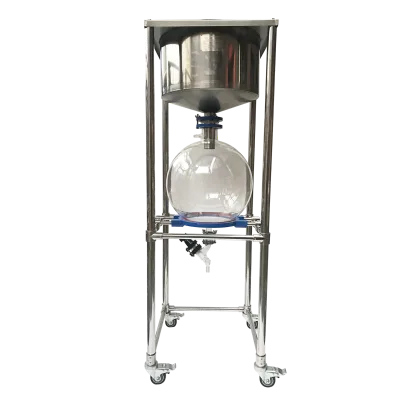
Compare 30 mobile PTFE vacuum nutsch filter options from verified suppliers. These units feature non-woven polyester or fiberglass media, HEPA or medium filtration grades, and volumes ranging from 10L to 50L for industrial, school, and hospital applications.
Key considerations
Products List




Comprehensive Sourcing Guide
Strategic Sourcing Guide for Mobile PTFE Vacuum Nutsch Filters
The procurement of industrial filtration equipment, specifically mobile PTFE vacuum Nutsch filters, requires a rigorous approach to align technical capabilities with operational safety and efficiency. Buyers in sectors ranging from pharmaceuticals to chemical processing must navigate a complex landscape of specifications, material certifications, and logistical constraints. This guide synthesizes available product attributes and industry standards to provide a structured framework for evaluating potential suppliers and selecting the appropriate filtration systems. The focus remains on evidence-based criteria, ensuring that procurement decisions are grounded in verified data rather than unverified marketing claims.
Technical Specifications and Material Composition
When evaluating a mobile PTFE vacuum Nutsch filter, the primary consideration is the filtration medium and its compatibility with the intended process. The core filtration material often cited in this category includes Non-woven Polyester Fiber or specialized PTFE treatments, though specific product listings may also reference Fiberglass or Non-woven materials depending on the filtration grade required. Buyers must verify the exact material composition against their chemical compatibility requirements. The filtration grade is a critical differentiator; observed specifications range from Medium Filter classifications to high-efficiency HEPA Filter standards. For applications requiring the removal of fine particulates, the micron ratings typically observed fall within the 1-5u range, which is essential for achieving the desired purity levels in the filtrate.
The physical dimensions and structural design of the filter unit are equally vital. Standard configurations often feature a base plate size of 400*500mm, providing a stable foundation for the filtration vessel. The filter bag or cartridge section is frequently designed with a round bag shape, with outer diameters standardized at 325mm or 350mm. Height variations are significant, with standard options including 600mm, 660mm, 900mm, 1000mm, and 1200mm. These dimensions directly impact the filter area, which is often customizable per request to match specific throughput requirements. The installation method is typically vertical lifting, which facilitates easy replacement and cleaning of the filter media.
| Attribute Category | Observed Standard Values | Verification Requirement |
|---|---|---|
| Filtration Grade | HEPA, Medium Filter | Confirm specific micron rating (1-5u) for target application |
| Filter Media | Non-woven, Fiberglass, PTFE | Verify chemical resistance for specific solvents |
| Dimensions | OD: 325/350mm; Height: 600-1200mm | Ensure fit within existing facility floor space |
| Base Plate | 400*500mm | Check load-bearing capacity for mobile units |
| Volume Capacity | 10L, 20L, 30L, 50L | Match process batch size requirements |
Compliance, Certification, and Operational Standards
Certification and adherence to international standards are non-negotiable for industrial filtration equipment, particularly when used in regulated industries such as medicine, food and beverage, and laboratory settings. The presence of CE certification is a common attribute observed in the market, indicating compliance with European health, safety, and environmental protection standards. However, buyers should not assume that every listed product automatically satisfies all regulatory requirements without explicit verification. Additional standards, such as ISO9001:2008, may be referenced regarding quality management systems, though the specific application of these standards to the final product must be confirmed.
The structural integrity and material safety of the filter frame are paramount. Stainless Steel (SS304) is a frequently specified material for the frame, offering corrosion resistance and durability in harsh environments. The filter connector type, such as the 222 Connector, must be compatible with existing vacuum lines and piping systems. Furthermore, the standard for the product itself may vary; while some listings reference specific model numbers like CPPL/DPPL or ZF-20L, others indicate that standards vary with specifications. Buyers must request the specific standard documentation for the exact model they intend to purchase to ensure it meets local regulatory mandates.
Cost Drivers and Procurement Economics
Understanding the cost structure of mobile vacuum Nutsch filters is essential for budgeting and total cost of ownership analysis. The price range for these units is highly variable, observed in the market from as low as 2 USD to as high as 2,000,000 USD. This vast disparity is not indicative of a single product tier but rather reflects differences in capacity, material quality, customization levels, and the inclusion of auxiliary components. A unit priced at the lower end of the spectrum may be a basic model with standard dimensions, while high-value units likely incorporate advanced filtration media, custom frame materials, or specialized automation features.
Minimum Order Quantity (MOQ) is another significant economic factor. While some suppliers may offer flexible terms with an MOQ of 1 unit, others enforce a standard MOQ of 10 pieces. This requirement can significantly impact the initial capital outlay for small-scale operations or pilot projects. Buyers should also consider the packaging requirements, which range from simple cartons to export-standard packing or strong wooden cases. The choice of packaging affects shipping costs and the risk of damage during transit, particularly for heavy mobile units. Additionally, the customization options available, such as specific filter bag environments or tailored dimensions, will invariably influence the final price.
Typical Applications and Operational Environments
The versatility of mobile PTFE vacuum Nutsch filters allows them to serve a broad spectrum of industries. Common applications include use in industrial settings, schools, hospitals, and laboratories. In the pharmaceutical and food and beverage sectors, these filters are critical for solid-liquid separation, oil impurity removal, and oil-water separation processes. The mechanical principle driving these operations is typically pressure filtration, often aided by a vacuum motive force to enhance efficiency. The performance is generally characterized as efficient filtration, capable of handling various media types.
The operational environment is another key consideration. The filter bag environment is often specified as room temperature, which limits the application to processes that do not require high-temperature resistance unless specifically engineered otherwise. The structure of the unit is designed to be mobile, allowing for flexibility in plant layout and process flow. The style is predominantly vertical, which optimizes space utilization and simplifies the gravity-assisted discharge of solids. For applications requiring specific glass volumes, options such as 20L or 50L are available, catering to both small-batch laboratory work and larger industrial batches. The filter bottle mouth dimensions, such as 80*50, must be matched to the inlet requirements of the process line.
Supplier Evaluation and Verification Protocols
Evaluating suppliers for mobile vacuum filtration equipment requires a meticulous review of their capabilities and track record. The origin of the products is a primary data point; a significant portion of the market supply originates from China, with specific manufacturing hubs noted in locations like Zhengzhou. While the country of origin is a fact, buyers should verify the specific factory credentials and quality control processes rather than relying solely on the geographic location. The supplier's ability to provide customization is a strong indicator of their technical competence, as evidenced by the availability of custom volume options (10L/20L/30L/50L) and variable standard specifications.
Buyers must scrutinize the product documentation to ensure that the claimed specifications match the actual deliverables. For instance, while a product may be listed with a standard of "5"-40", this likely refers to a dimensional range or a specific series code rather than a universal standard, and clarification is necessary. Similarly, the "prod_standard" field often states "Varies with specifications," which necessitates a direct request for the specific standard applicable to the ordered unit. Suppliers should be able to provide detailed technical drawings, material certificates for the SS304 frames, and proof of CE certification for the specific batch. The absence of a specific supplier name in public listings suggests that buyers should conduct their own due diligence to identify reputable manufacturers who can meet these rigorous verification standards.
Quality Control and Long-Term Procurement Considerations
Ensuring long-term reliability and performance of the filtration system requires a proactive approach to quality control. The filter media, whether Non-woven Polyester Fiber or Fiberglass, must be inspected for consistency in fiber density and pore size to guarantee the specified micron ratings. The assembly of the filter bag section, particularly the round bag shape and the vertical lifting mechanism, must be robust to prevent leaks or structural failure under vacuum pressure. The packing method, whether in a wooden box or carton, must be sufficient to protect the unit during shipping, especially given the mobile nature of the equipment.
Long-term procurement considerations extend beyond the initial purchase price. Buyers should evaluate the availability of replacement parts, such as filter bags and connectors, to minimize downtime. The customization availability suggests that spare parts can be tailored to the specific unit, but lead times for these custom components must be clarified. The standard of the product, which may vary, implies that future replacements might need to match the original specifications precisely. Furthermore, the usage of the filter for solid-liquid separation and oil impurities means that the cleaning and maintenance procedures must be clearly defined. Suppliers should provide comprehensive operation manuals that detail the cleaning of the non-woven media and the inspection of the vacuum system components. By focusing on these quality and maintenance aspects, buyers can ensure that their investment in mobile PTFE vacuum Nutsch filters delivers sustained value and operational efficiency over the lifespan of the equipment.
FAQs
What certifications are available for mobile PTFE vacuum Nutsch filters?
CE certification is available for these units, indicating compliance with European safety standards. Buyers must verify that the specific batch holds this certification rather than assuming it applies to all listed products.
Which volume capacities are offered for mobile vacuum filtration systems?
Available volumes include 10L, 20L, 30L, and 50L options to match process batch sizes. Customization is available to adjust these volumes per request, ensuring the system fits specific operational throughput requirements.
How is the filter media constructed for these mobile units?
The filter media typically uses non-woven polyester fiber or fiberglass materials for effective particulate removal. These materials support micron ratings between 1-5u and are designed for room temperature environments during operation.
Can the base plate size be customized for mobile filter installations?
A standard base plate size of 400*500mm is commonly observed for these units. While the standard is fixed, customization options exist for other dimensions to accommodate specific facility layouts and load requirements.
What is the minimum order quantity for purchasing these filters?
The minimum order quantity is typically 10 pieces, though some suppliers may offer flexible terms starting from 1 unit. Buyers should confirm the specific MOQ with the vendor before placing an order.
Which packaging methods are used for shipping mobile vacuum filters?
Packaging options include wooden boxes, cartons, and export standard packing to ensure safe transit. Strong wooden cases are often used for larger units to prevent damage during international shipping.
What applications are suitable for mobile PTFE vacuum Nutsch filters?
These filters are suitable for industry, school, hospital, lab, medicine, and food and beverage sectors. They are specifically designed for solid-liquid separation, oil impurity removal, and oil-water separation processes.